

Spotlight on Art at the Airport with Artist Marcia Huyer
Nothing evokes feelings of coziness and comfort quite like a traditional Newfoundland and Labrador mitten. The care knitted with every stitch, the bold and playful patterns and colours, the warmth they provide on the coldest of winter days — what's not to love?
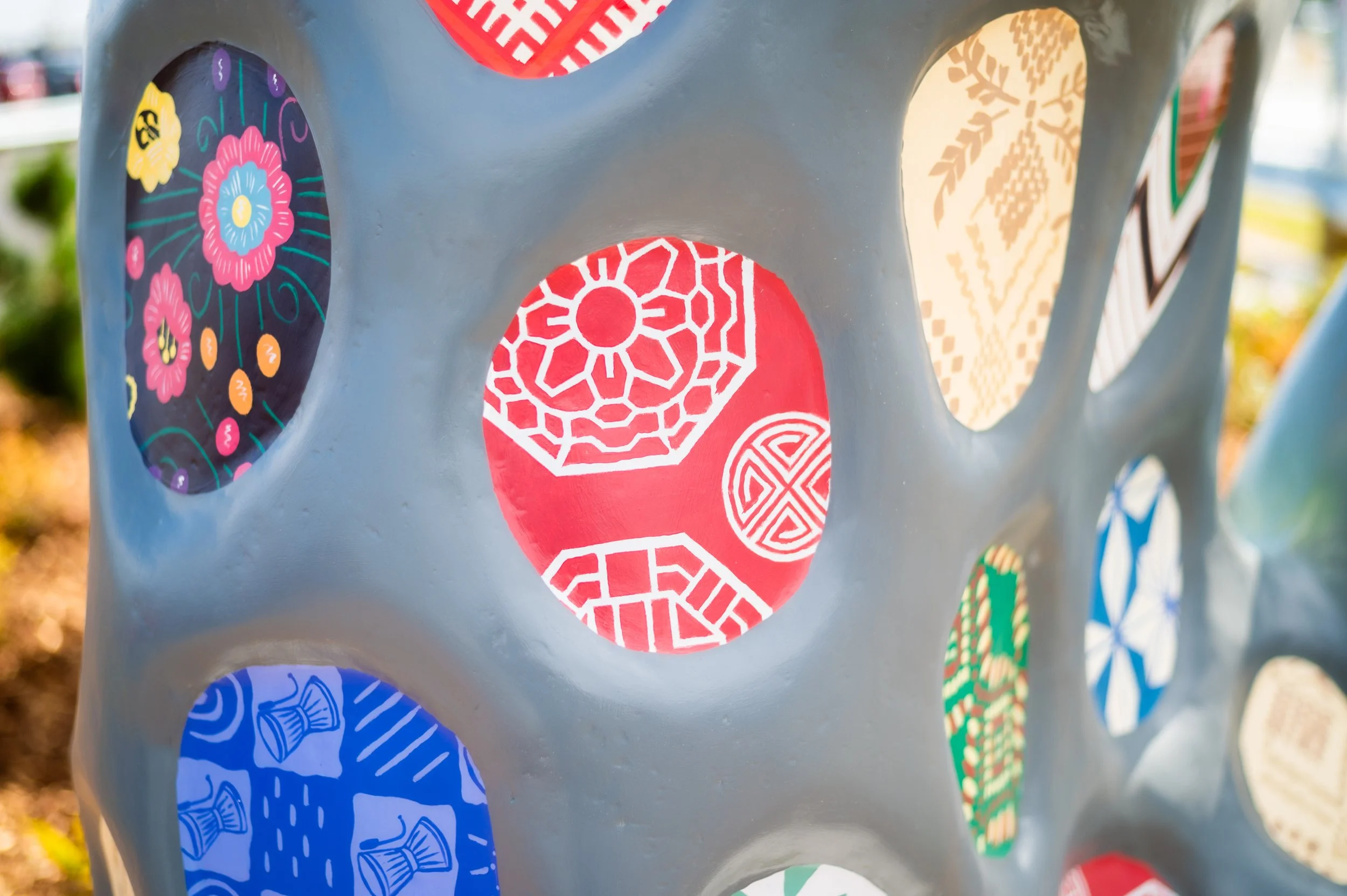
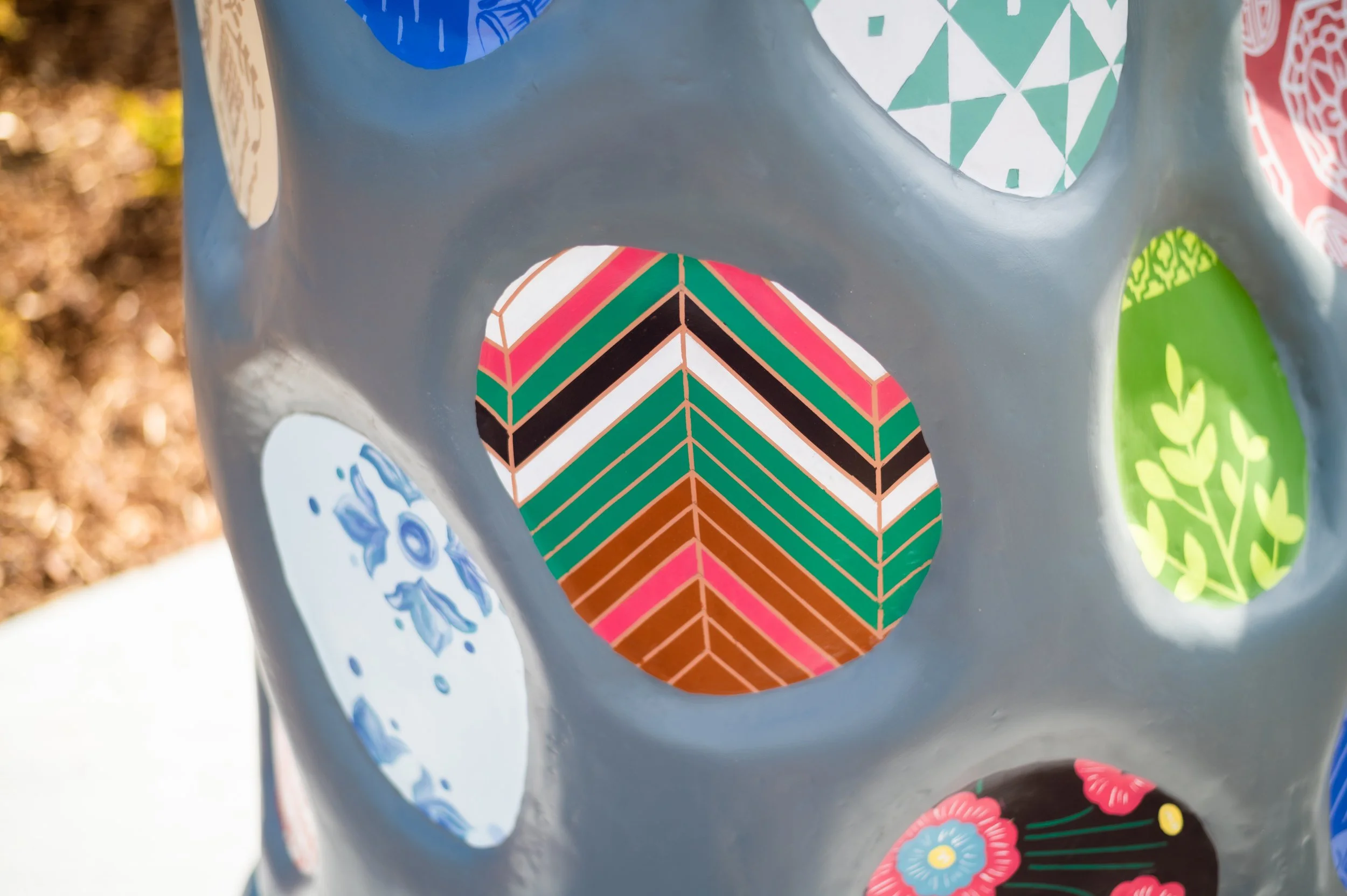
It’s easy to see why Corner Brook-based visual artist Marcia Huyer landed on the idea of an oversized mitten for her sculpture at St. John's International Airport (part of the Art at the Airport initiative). The piece not only evokes this sense of warmth, but also welcome within the various textile patterns incorporated into the design, representing the diverse cultures of the province.
Marcia recently shared with Business & Arts NL a deeper look into her cozy creation and the collaborations that helped bring it to (larger than) life.
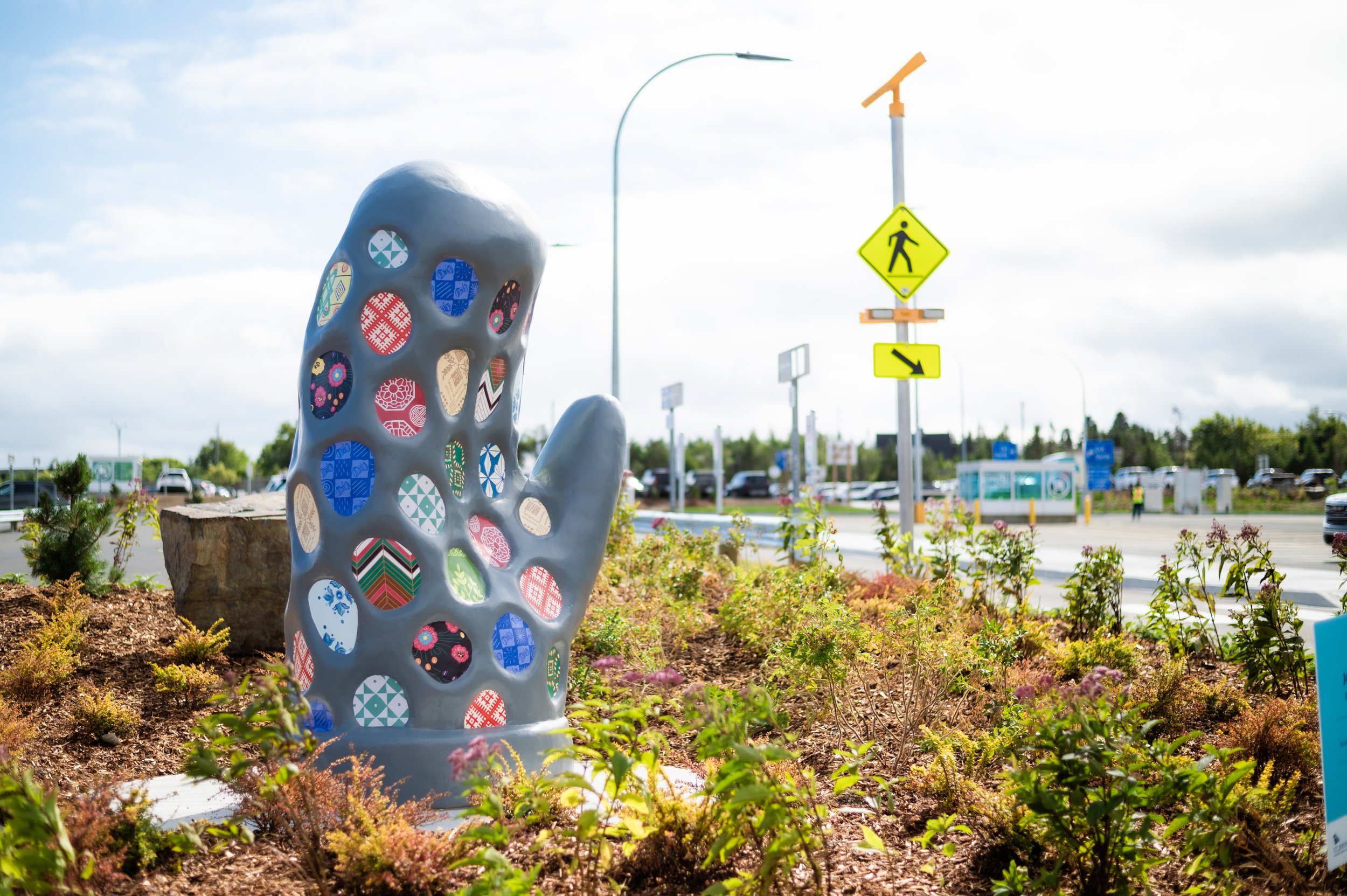
Marcia Huyer’s sculpture “Who Knit You” at St. John’s International Airport
Business & Arts NL: Your piece stands as a warm welcome, or a friendly wave goodbye, to those passing through the airport parking area. How did the concept come to you for this wonderful sculpture and what initially inspired you to focus on a mitten?
Marcia Huyer: I am glad to hear that the mitten seems animated and friendly. The concept was driven by the call for proposals from Business & Arts NL. There were three different sites and suggested themes to work within. I was drawn to the "Gateways and Transitions" theme, which asked us to consider “various aspects of transition and change such as a sense of belonging and receptivity; welcoming newcomers, immigrants and returning locals alike, embracing cultural diversity and shared experiences.”
The ideas of belonging and receptivity and welcoming newcomers stood out to me as my father immigrated to Canada when he was a child. I grew up within a Dutch immigrant community and had a front row seat to how people lived simultaneously in two places and cultures. In 2018, I moved to Newfoundland, a part of Canada with its own distinct culture. When a Newfoundlander meets you, they want to know your surname and where you are from (Who Knit Ya?). This is not a question to infer difference but one to make a connection.
So why the mitten? Mittens in Newfoundland are particularly distinctive in their shape and patterns. Due to the climate and necessity to be outside, knitting has been an essential skill in Newfoundland. The mitten is an understated, humble article of clothing signifying warmth and comfort. A knitted mitten carries the maker within it. The patterns on a mitten hold history, place and stories. The gesture of the waving mitten echoes Newfoundland’s strong trait of friendliness and openness to others.
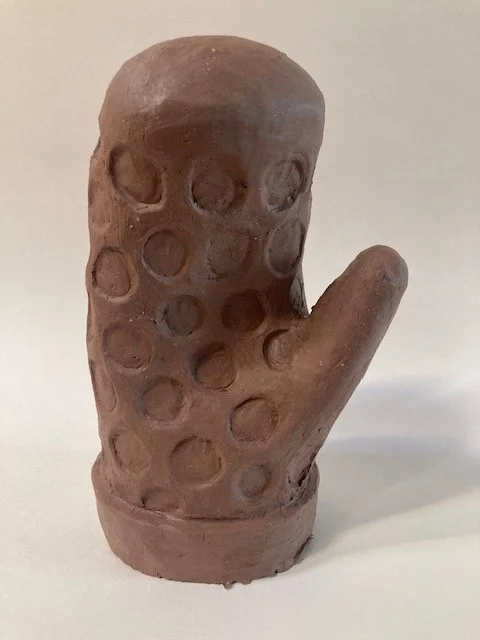
To create her larger sculpture, Marcia started with a life-size clay mitten.
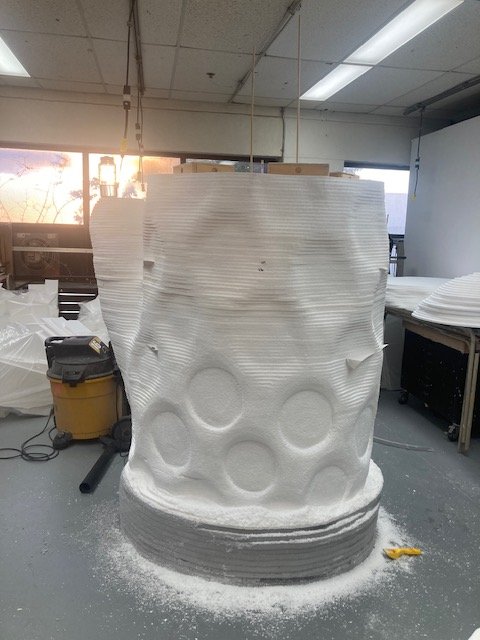
Describing her process, Marcia says “The clay mitten was digitally scanned. A fusion 360 software was used to create a pattern. The shape of the mitten was then cut out by a CNC machine with styrofoam. Pieces of styrofoam were stacked in order, which recreated the shape of the clay mitten. There was some additional carving that was necessary. The sculpture was then covered in fibreglass and epoxy and then primed and painted.”
Business & Arts NL: Diversity is woven right into this piece, with different cultures being represented in the various patterns you've incorporated into the mitten. Why was this important to you and how did you choose which partners to collaborate with (and which patterns to include) for this aspect of your sculpture's design?
Marcia Huyer: Newfoundland’s original name, Ktaqmkuk, means "across the water," which suggests to me that this place has a very long history of being connected to other places and people. The landscape of the island and influences from other cultures has formed a distinctive Newfoundland culture. Some of these distinctive cultural signifiers can be found in the textiles, food and the characteristics of the people. By incorporating patterns within a Newfoundland mitten, this represents to the newcomer that they are welcome to become part of this place, while the place will simultaneously become part of you; as well as a statement to the Newfoundlanders that the new cultures will become part of the fabric here but the culture of Newfoundland will stand strong.
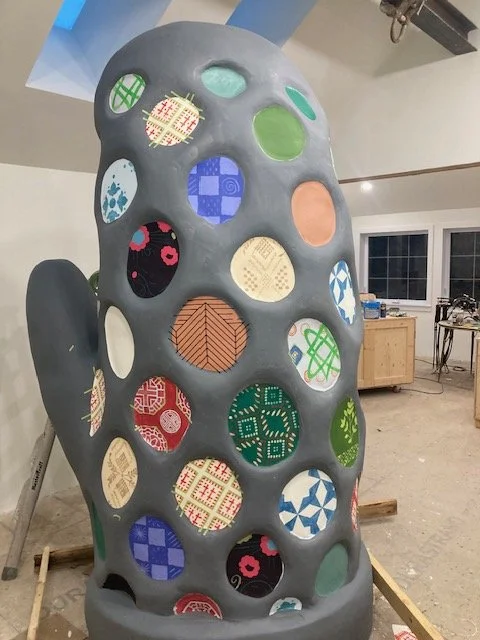
As this is a public sculpture in a public place, it seemed fitting to collaborate with others on this sculpture. While I was writing the proposal, I reached out to Ernest Boetang, Ghana born and now based in Corner Brook. During Ernest's MFA studies, I learned that Ghana fabrics are very symbolic and carry visual messages or adages. I began by reaching out to artists that I know personally and commissioned them to make a design based on their cultures. These artists are Kerenhappuch Gandu (Nigeria), Ismael Gomezcaña Cuevas (Mexico), Hadiza Bello (Nigeria), Ardalan Hamedi (Iran) and Kelsey Street (Mi’gma’gi). (Ernest was too busy finishing his graduate degree.) The other patterns were either from friends or friends of friends, or other connections such as my electrician’s wife.
The remaining collaborators are not artists, so I asked them to share textile patterns that they feel represent their culture and country. Through shared open source images, or images of textiles in their collections, or lending me traditional clothing, I adapted the designs to fit the sculpture. The colours and designs were vetted by my collaborators.
Details about each pattern can be found on the Business & Arts NL website.
Business & Arts NL: I understand one of the patterns is based on a pair of your own mittens. Is there a special story or significance behind these mittens or the particular NL pattern you chose?
Marcia Huyer: In May of 2019 I made a Mainlander mistake and did not pack enough warm clothes when visiting Fogo Island for the first time. I was there for several days and noticed many places selling knitted items. This yellow on grey pair of honeycomb/waffle style mittens stood out to me. I was instantly pleased and felt comforted by the mittens for the remainder of the trip.
I did consider using the trigger mitten for the sculpture but thought it might not translate as well in a large-scale sculptural form. The honeycomb pattern is also referred to as a "Newfie" mitten. I was intrigued by the history of this pattern and reached out to Christine LeGrow and Shirley A. Scott, authors of Saltwater Mittens: Knitting patterns for Newfoundland’s most popular designs. Christine LeGrow told me the honeycomb/waffle style mittens became popular in the late 1960s to 1970s. The pattern was a Patons & Baldwins design and based on her memory the pattern was a free leaflet with the purchase of yarns. The popularity of the pattern was also likely due to its simplicity, yet the knitter can personalize it through colours.
Business & Arts NL: What was the most enjoyable part of working on this project and what kind of feedback have you been getting since the sculpture was unveiled?
Marcia Huyer: The most enjoyable part of working on this project was learning about the various patterns and the significance of the symbolism to the cultures. Painting the patterns on the mitten was also a highlight. Several friends helped paint the patterns. Shoutout to Nancy Jacobsen, Juniper Hengeveld, Mara Korkola, Robert Hengeveld and Tiffany Elizabeth A. Lyver for painting!
When you put art in public spaces, you do not hear or see the feedback from people about the work as you would in a gallery. The work was posted in the “Newfie Knitters” Facebook group. A cousin in Ottawa noticed this post and shared it with me. I decided to check out that Facebook post and read the comments. They were positive!
Business & Arts NL: Is there anything you'd like to add about this installation or being involved with this particular project?
Marcia Huyer: It was a pleasure to work with Amy Henderson and Business & Arts NL. I am grateful to the airport for supporting artists and trusting Business & Arts NL with the process of public art.
Is your municipality or organization considering incorporating public art into your next project? Visit Business & Arts NL's website (https://businessandartsnl.com/resources) for public art resources and toolkits, including our new Unlocking Public Art in NL: Public Art Funding and Planning Primer, which outlines practical approaches to funding, multi-sector partnerships and strategic planning.